
The fact that there is no risk of phylloxera infestation means that vines don’t need to be grafted onto American rootstocks, as is necessary in most others parts of the world. Shoots can simply be inserted directly into the soil.
The trellising system is Guyot or double Guyot, whereby the two lateral shoots are pruned to leave 6 to 8 buds each. Vineyards are planted at a distance of one meter, with two meters between the rows, giving a density of 5000 vines per hectare. Viña Falernia comprises around 160 hectares of vines (400 acres), plus 140 hectares (350 acres) owned by the Olivier´s family.
The vineyards are the heart of wine production, where climate, soil, and altitude come together to define the character of each grape. Carefully selected sites ensure optimal growing conditions, allowing vines to thrive and produce high-quality fruit that reflects its terroir.Vineyards are managed with a focus on balance and sustainability. Controlled irrigation, precise pruning, and canopy management help regulate vine growth and ensure even ripeningEach vineyard block is cultivated according to its unique soil composition and microclimate, allowing the true expression of the land to emerge in the wines. From planting to harvest, meticulous vineyard management lays the foundation for wines of elegance, structure, and authenticity.
Titon vineyard, lies at an altitude of 350 m (1070 ft.), 18 km (11 miles) away from the Pacific Ocean without the presence of the Coastal Mountain Range in between, as a result receiving a strong impact from the Ocean influencing the climate producing morning fog and a strong cool breeze.
Day temperature there reaches a maximum of 24-25ºC (74ºF) during the summer and 9-10ºC (48-50ºF) at night; it is foggy very often until 10:00 to 11:00 in the morning. These are the perfect conditions for cultivating Chardonnay, Pedro Ximenez, Sauvignon Blanc, Riesling, Syrah, Pinot Noir and Sangiovese. The vineyard has 125 ha (312 acres) under vines.

The second site is just around the winery at the end of Puclaro Lake – an artifitial dam built by the government in 2003 for supporting the irrigation in the valley and guaranteeing water supply for the cities of Coquimbo and La Serena.
Altitude is 515 m (1570 feet). Climate conditions are very different; it is drier than Titon, warmer and with fiewer foggy mornings (due to the lake that changed the microclimate). This site is amazing for grapes such as Syrah, Sangiovese, Pedro Ximenez, Torontel and Viognier.

Close to Vicuña there is a young planting called “Pedriscal” which is 30º South with temperatures between 21ºC to 7ºC (70-45°F) at 560 m (1680 ft.). 40 ha (100 acres) of vines are planted on the old bed of the Elqui River with a very stony soil. French varietals such as Syrah, Malbec, Carménère and Cabernet Sauvignon grow here in ideal conditions.
Carefully managed through sustainable cultivation practices, the Pedregal vineyard contributes depth and complexity to Viña Falernia’s portfolio, showcasing another unique expression of the Elqui Valley’s diverse terroirs.

The fourth site is an old vineyard called “Huanta” or “Guanta” that is a spectacular rocky valley at an altitude between 1700 to 2070 m (5185-6320 ft.), one of the highest vineyards in the world. Climate here is very dry with a great gap between day and nighttime temperatures. Pedro Ximenez and Moscatel Rosada are the grapes of this area.
The vineyard’s elevation creates a long growing season with pronounced day-to-night temperature variation, allowing grapes to ripen slowly while retaining vibrant acidity and aromatic precision.
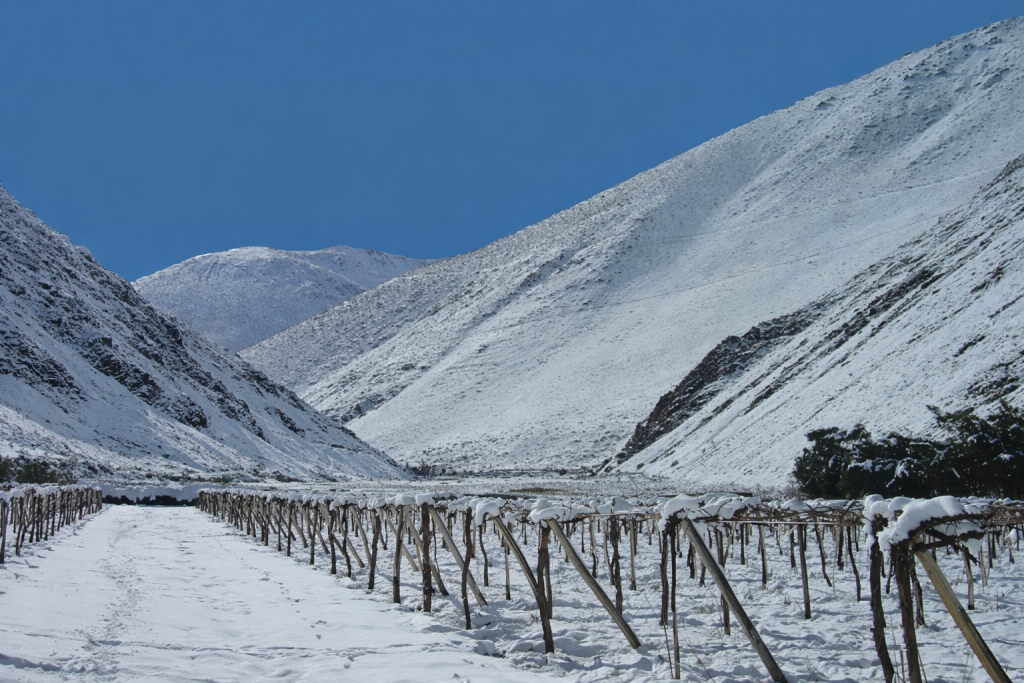
Wine cultivation begins in the vineyard, where climate, soil, and farming practices work together to shape the character of the grapes. Careful vineyard management is essential to producing high-quality wines that express their terroir.
Modern wine cultivation focuses on site selection, ensuring vines are planted in soils and climates best suited to each grape variety. Techniques such as controlled irrigation, canopy management, and pruning help regulate vine growth, improve air circulation, and optimize sun exposure.
Sustainable cultivation methods are increasingly important in winemaking. These include responsible water use, natural pest control, and limiting chemical inputs to protect both the environment and grape quality. Many vineyards also practice low-yield farming, allowing vines to concentrate energy into fewer grapes for greater flavor intensity.
From vine to harvest, cultivation methods play a critical role in determining grape ripeness, balance, and overall wine quality, forming the foundation for exceptional winemaking.